Things in Nature Merely Grow
A couple weeks ago, I checked out Yiyun Li’s Things in Nature Merely Grow from the local library. After reading the first cry pages, I decided to buy a copy for myself, because my reaction to the book was so strong that I simply knew I wanted to annotate, highlight, dog-ear the hell out of this it. To be more specific, the first eight pages made me want to cry. The fact that I didn’t is not indicative of how much they actually impacted me.
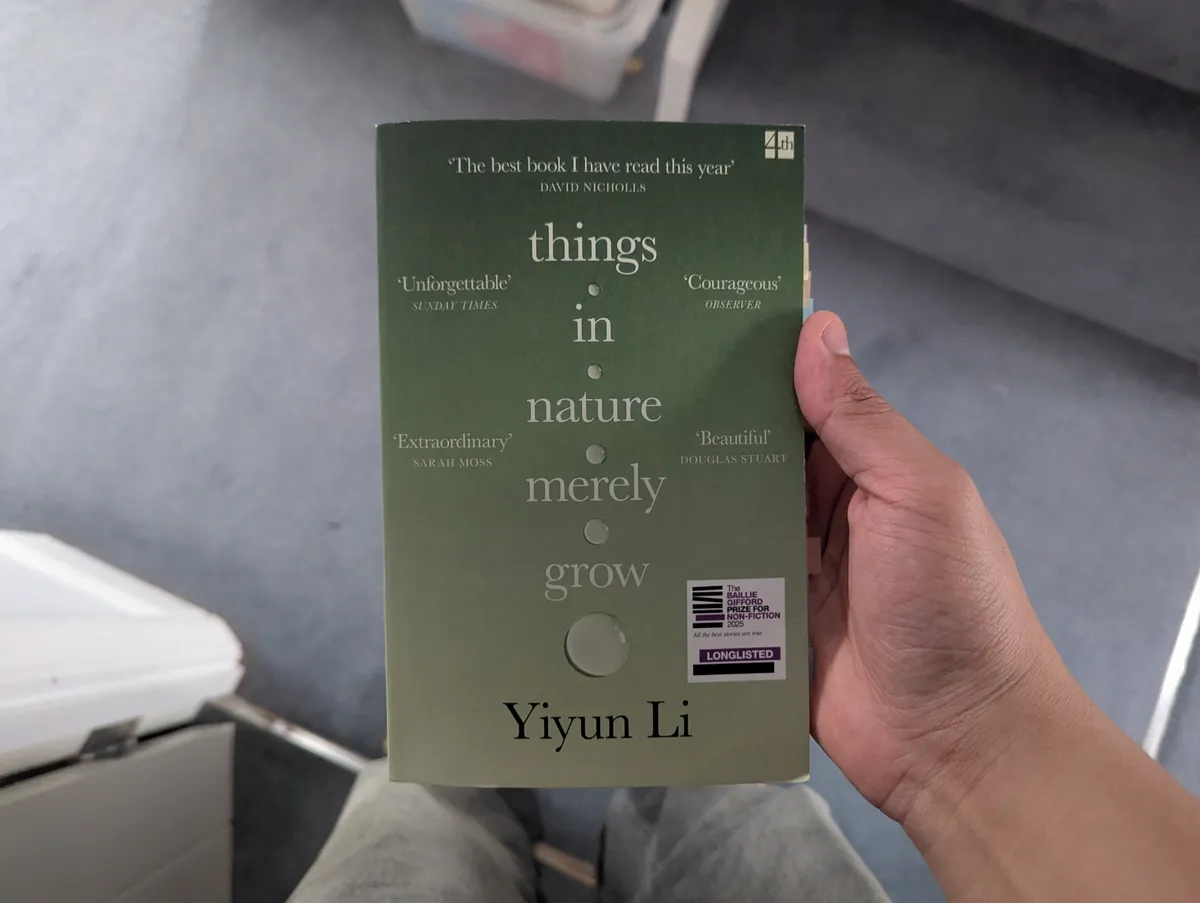
This book could be succinctly described as a grief memoir. I’ve read maybe a couple of those during the past few years, and I find them all interesting. Grief is not something I’m accustomed to. I’ve lost only a handful of people in my adult life, all of them by suicide, and all of them only acquaintances, which means that all of my friends and relatives are still alive and mostly well. Which means, and the thought terrifies me, that the worst is yet to come, and because I’ve never properly grieved anyone, I’m scared by the intensity of the emotions I will have to process. Will it break me down? Will the pain be manageable? Is it something you can ever recover from?
In this way, reading books like this one help me step in someone else’s shoes, but the nature of living vicariously means that I can’t access those emotions in their full spectrum, but only their reflection or shadow. It’s interesting. Li lost not just one, but both her sons to suicide. Things in Nature Merely Grow is a book dedicated to making sense of the death of her second child, although she acknowledges how it’s impossible to tie everything in a reasonable, satisfactory narrative. Her experience is something she describes as an abyss—she found herself into it, and has no way to get back out of it. She has to live with being there, and writing can alleviate the lonesomeness and the confusion.
Of course, talking about this book won’t make it justice. If you want a clear picture of Yi’s mind, you should read it. It’s an impactful read, and a useful one, to a degree. Her stile is concise and clear, to the point, even when reason eludes her. Many sentences spoke to me and I wish to carry them with me.
Sometimes a young writer or a writing student tells me how hard they find writing is. Writing is so hard, they say, with a whine or else self-glorification in their voice. That always puts me in a suspicious mood. If you complain about writing being hard—I sometimes want to say to them—then you must have understood very little about life.
There is also another paragraph that spoke to me, and I immediately snapped a picture of it and sent it to two of my oldest friends:
There is a tragedy, and some people’s social and religious conscience decrees that they must be present: to their minds they must be doing things that work. For whom, though? Sometimes people want to play a part in a tragedy that is, thankfully, not theirs personally: that, too, is doing things that work—for their own psychology.
There is so much I have to learn about death and dying, and by extension, so much I still don’t know about living.